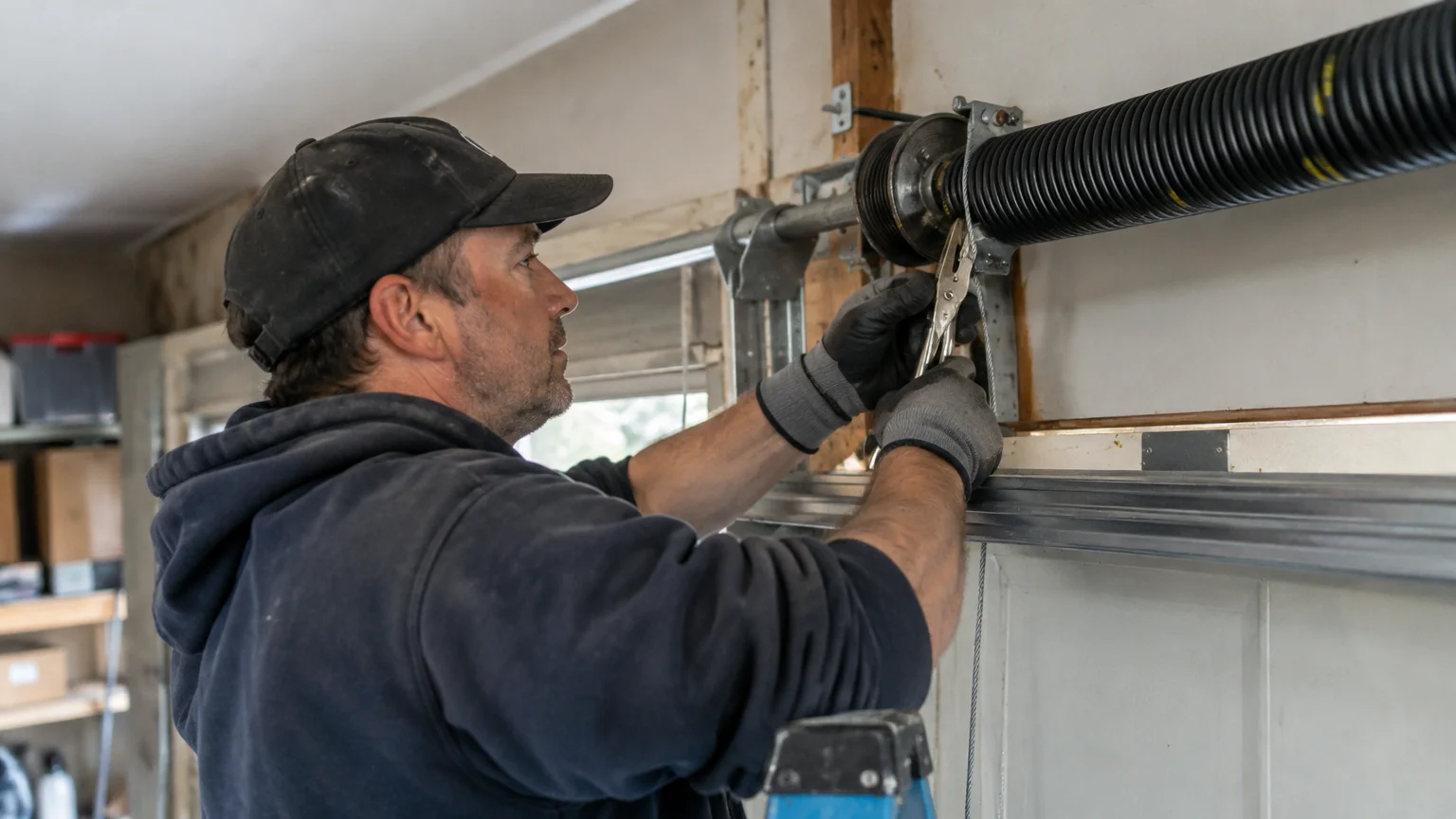
How to repair garage door springs is mainly a safety question, not a home repair task. A garage door spring stores strong energy and supports a heavy door. Homeowners can inspect the area and keep tracks clear, but trained technicians should repair springs, cables, and bottom brackets.
Table of Contents
- Why is garage door spring repair dangerous for homeowners?
- What do garage door springs actually do?
- What can go wrong when you try to repair garage door springs?
- How can you tell when a garage door spring needs professional attention?
- Why should lift cables be inspected during spring repair?
- What does a professional garage door spring repair involve?
- What should you do when a garage door spring breaks?
Why is garage door spring repair dangerous for homeowners?
Garage door spring repair is risky because springs help hold up a heavy door. They stay under strong tension during normal use. If a spring, cable, tool, or bracket fails, parts can move very fast. For this reason, spring repair should be left to a trained garage door technician.
How stored spring tension creates serious injury risks
Stored tension is energy held inside a spring while it is stretched or twisted. Torsion springs sit above the door and twist as the door moves. Extension springs usually run beside the upper tracks and stretch during operation. Both systems can release energy without warning.
A damaged spring may snap, shift, or pull nearby parts. A tool may slip from a hand. A wall bracket may break loose. Hands, fingers, eyes, and the head can all be hurt. The risk remains even when the door looks still.
Homeowners should never loosen, cut, stretch, wind, or replace a garage door spring. They should also avoid touching tight lift cables or cables wrapped around a drum. These parts can still hold force after the spring breaks.
Why a closed garage door can still be hazardous
A closed door may hide a broken spring, loose cable, or bent support. The door may also move if someone uses the opener. When the spring cannot carry the load, the opener may strain or fail. The door may fall, lift unevenly, or stay stuck.
Keep children, pets, vehicles, and stored items away from the door. Do not stand below a door that is crooked or partly open. Kingman Garage Door Repair helps homeowners understand when a safe inspection is needed. It does not ask them to attempt dangerous work.
What do garage door springs actually do?
Garage door springs help balance the door’s weight. This lets the opener guide the door instead of lifting the full load alone. When springs weaken or break, the door may feel heavy, move unevenly, make noise, or become unsafe to operate.
Torsion springs and extension springs
Torsion springs mount on a shaft above the door. They twist as the door opens and closes. Extension springs sit along the horizontal tracks. They stretch as the door rises. Each type needs different parts, tools, supports, and safety checks.
Spring type is only one part of the repair. Door weight, height, track layout, drum size, and cable setup also matter. A replacement spring may look right but still be wrong for the door. The part must match the whole system.
The best garage door spring choice is not based on appearance alone. A trained technician checks the door and its parts before choosing a replacement. This helps protect the opener and other parts from extra strain.
How springs balance the door’s weight
A balanced door should move smoothly and stay supported through much of its travel. The spring system works with cables, drums, rollers, tracks, and the opener. If one part fails, other parts may carry force they were not made to handle.
This is why replacing only the part that looks broken may miss a larger issue. A technician checks the spring system and the door as a whole. In Kingman, dust, heat, building age, and daily use may also affect metal parts.
Homeowners can safely keep tracks clear and watch for changes. They can also check that the garage door seal is not loose or damaged. They should not test the door by lifting a heavy panel or disconnecting the opener. Those checks may place the door in an unsafe position.
What can go wrong when you try to repair garage door springs?
DIY spring work can turn a small failure into a larger repair. Common risks include using the wrong spring, supporting the door poorly, or disturbing a part that still holds tension. A mistake may damage the cables, tracks, opener, panels, or wall supports.
Common mistakes with tools, supports, and replacement parts
Garage door spring work needs tools made for the system. Improvised bars, ladders, clamps, and household tools may slip or break. A jack or support placed in the wrong spot may bend a panel or damage a track.
Replacement parts also need careful matching. Spring length alone does not identify the right part. Wire size, inside diameter, winding direction, door weight, and system design may all matter. Guessing can leave the door unsafe or put extra stress on the opener.
A homeowner should not follow a spring replacement sequence from a video or guide. General safety information can explain the risk. Instructions for winding, removing, or fitting a spring are not safe for an untrained person.
How damage can spread to cables, tracks, and openers
A broken spring can let the door shift. That movement may pull a lift cable from its drum or bend a track. A cable that jumps off the drum can bunch, fray, or catch. The opener may then pull against a door that is too heavy or out of line.
Continued use can make the problem worse. It may also leave a door above a vehicle or block a business entrance. Garage Door Off Track Repair, Garage Door Cable Repair, or Garage Door Opener Repair may be needed along with spring service.
How can you tell when a garage door spring needs professional attention?
A spring needs professional attention when the door becomes heavy, uneven, noisy, or stuck. A gap in a torsion spring, a loose extension spring, or a hanging cable is a strong warning. Do not force or operate the door until the system is checked.
Visible signs of a broken or weakened spring
Common signs include a door that will not open, an opener that hums, or a door that rises only a little. A spring may show a clear break, rust, stretching, or odd movement. Extension spring safety cables may also look loose or out of place.
Other warnings include a gap in the coil, a door that slams down, or panels that sit unevenly. A spring broken on one side can make the whole door tilt. The visible symptom may not show the full cause.
Homeowners can look from a safe distance with the door closed. They should not touch the spring, cable, drum, bracket, or track. A flashlight may help them see the parts, but it should not lead to hands-on testing.
Why unusual sounds and uneven movement matter
Popping, snapping, scraping, and grinding sounds may show movement in a loaded part. Jerking or shaking may point to a cable, roller, track, spring, or opener issue. Treat these signs as garage door safety warnings, not small annoyances.
A door that works sometimes can still be unsafe. Intermittent movement may mean a cable is slipping or a spring is losing support. Kingman Garage Door Repair can help property owners decide whether they need Garage Door Spring Repair or a wider check.
Why should lift cables be inspected during spring repair?
Lift cables connect the spring system to the door. They transfer spring force through drums and brackets. If a cable is frayed, loose, off the drum, or twisted, the door may not move safely even after the spring problem is found.
How lift cables work with the spring system
As the door moves, lift cables travel around drums near the top corners. The cables must stay lined up and carry force evenly. Their condition depends on the spring system, drum position, bottom brackets, door alignment, and track movement.
A garage door cable fix is not just a matter of pulling a loose cable back into place. The cause must be found first. A cable may have moved because of a broken spring, damaged bracket, bent track, or door that shifted out of level.
What frayed, loose, or off-drum cables can indicate
Frayed strands may show rubbing, age, poor alignment, or extra stress. A loose cable may point to a broken spring or a door that lacks proper support. An off-drum cable can create a sudden hazard when the door moves.
Homeowners should not straighten, reconnect, or tighten the cable. Lift cables and bottom brackets may hold dangerous force. The safest choice is to stop using the door and keep people away until the system is inspected.
For homes and businesses across the main Kingman area, help may be needed in Hilltop, Clacks Canyon, New Kingman-Butler, Golden Valley, Valle Vista, and nearby communities. A combined spring and cable check can help prevent a repeat failure. The right repair depends on what caused the cable to move.
What does a professional garage door spring repair involve?
A professional repair starts with a safety check and a full view of the door system. The technician looks at the spring, shaft, drums, cables, brackets, tracks, rollers, panels, and opener. The goal is to find the failed part and any damage caused by the failure.
How technicians assess the door and identify the correct parts
The technician checks the door design, spring type, mounting points, cable path, and signs of wear. They also look for loose fasteners, bent tracks, damaged panels, and poor alignment. These checks help keep a new part from being placed in an unsafe system.
The work area must stay clear. People and vehicles should remain outside the door’s movement zone. The technician uses proper tools and safety methods for the spring system. This is very different from trying to learn how to replace garage door springs through trial and error.
The final repair cost is confirmed on a quote after the needed work is clear. Parts, door size, access, damage, and urgency can affect the amount. Spring repair is often a smaller job than replacing a full door. Cable or structural damage can make the repair more involved.
Why testing balance and operation is essential after repair
Repair is not complete when a new spring is fitted. The technician checks that the door sits correctly, moves smoothly, and works with the opener. Cables should follow the drums properly, and the door should not bind, slam, or lift unevenly.
Safety devices and opener operation also need attention. A door that moves well by hand may still have an opener or sensor issue. Proper testing helps protect people, vehicles, and the building from another failure.
What should you do when a garage door spring breaks?
When a spring breaks, stop using the door and keep everyone clear. Do not pull the emergency release, lift the door by force, or touch the spring and cables. Protect the area first, then arrange garage door repair from a qualified professional.
Safe steps to protect people, vehicles, and property
The safest response is simple:
- Keep children, pets, workers, and visitors away from the door.
- Leave vehicles outside the opening if the door may move.
- Do not use the opener after a spring or cable failure.
- Do not touch loose cables, brackets, drums, or spring coils.
- Tell the technician about sounds, movement, or visible damage.
If the door is partly open, do not try to close it alone. A heavy door can fall without warning. If it blocks a vehicle or entrance, explain the access problem when requesting service.
When same-day or emergency garage door repair is appropriate
Same-day or emergency help may be suitable when the door cannot secure a home, blocks a business entrance, traps a vehicle, or has a loose cable or falling panel. A door that is closed but damaged may still need prompt attention if someone could operate it.
Garage Door Installation is a separate service when the door has major damage or replacement makes more sense. For a repairable failure, Garage Door Spring Repair can address the spring system while cable, track, or opener concerns are checked.
Key takeaways
- Spring work is hazardous because springs store strong energy.
- Homeowners can inspect and clean, but they should not adjust springs or cables.
- A broken spring can affect cables, tracks, panels, and openers.
- A technician must match parts and test the full door system.
- Stop using a damaged door until the system has been checked.
Frequently Asked Questions
Can a homeowner safely repair a garage door spring?
No. A homeowner can keep the area clear, inspect from a distance, and report symptoms. Spring, cable, bottom-bracket, and tension work should be handled by a trained technician. Stored energy can cause serious harm if a tool slips or a part releases suddenly.
How do you know if a garage door spring is broken?
A broken spring may show a gap in the coil, a door that feels very heavy, or an opener that cannot lift the door. Loud snapping sounds, uneven movement, and loose cables are also warnings. View the spring without touching it or operating the door.
Can a garage door opener work with a broken spring?
It may run, but using it can damage the opener or worsen the door problem. The opener is not made to replace the spring’s support. If the door is heavy, crooked, or stuck, stop using the opener and arrange a professional inspection.
Should lift cables be replaced with garage door springs?
Not always, but cables should be inspected whenever spring work is needed. A broken spring can pull a cable out of line or damage it. Frayed, loose, or off-drum cables need proper attention before the door is used again.
Who repairs garage doors near me?
A local garage door repair company can assess springs, cables, tracks, and openers. Kingman Garage Door Repair serves Kingman and nearby areas. The safest choice is a provider that treats spring and cable work as hazardous and explains the needed repair before work begins.
Conclusion
How to repair garage door springs is best understood as a safety question, not a home project. Homeowners can notice warning signs and protect the area, but trained technicians should handle loaded springs, lift cables, and bottom brackets. Kingman Garage Door Repair can help restore safe access when a spring failure affects a home or business. Contact us today for urgent garage door spring repair.
If you are not sure what you are dealing with, it is worth having someone look at it before it turns into a bigger job. Get in touch with Kingman Garage Door Repair today and we will tell you where you stand.