Garage Door Spring Repair in Kingman, AZ
Spring repair around Kingman means fitting a replacement matched to the door's weight, then balancing the door so the opener and your own arm just steer it.
A loud crack from the garage, followed by a door that refuses to rise or climbs a few inches and quits, points to a broken spring. Keep the door shut and read the safety notes before you go near it.
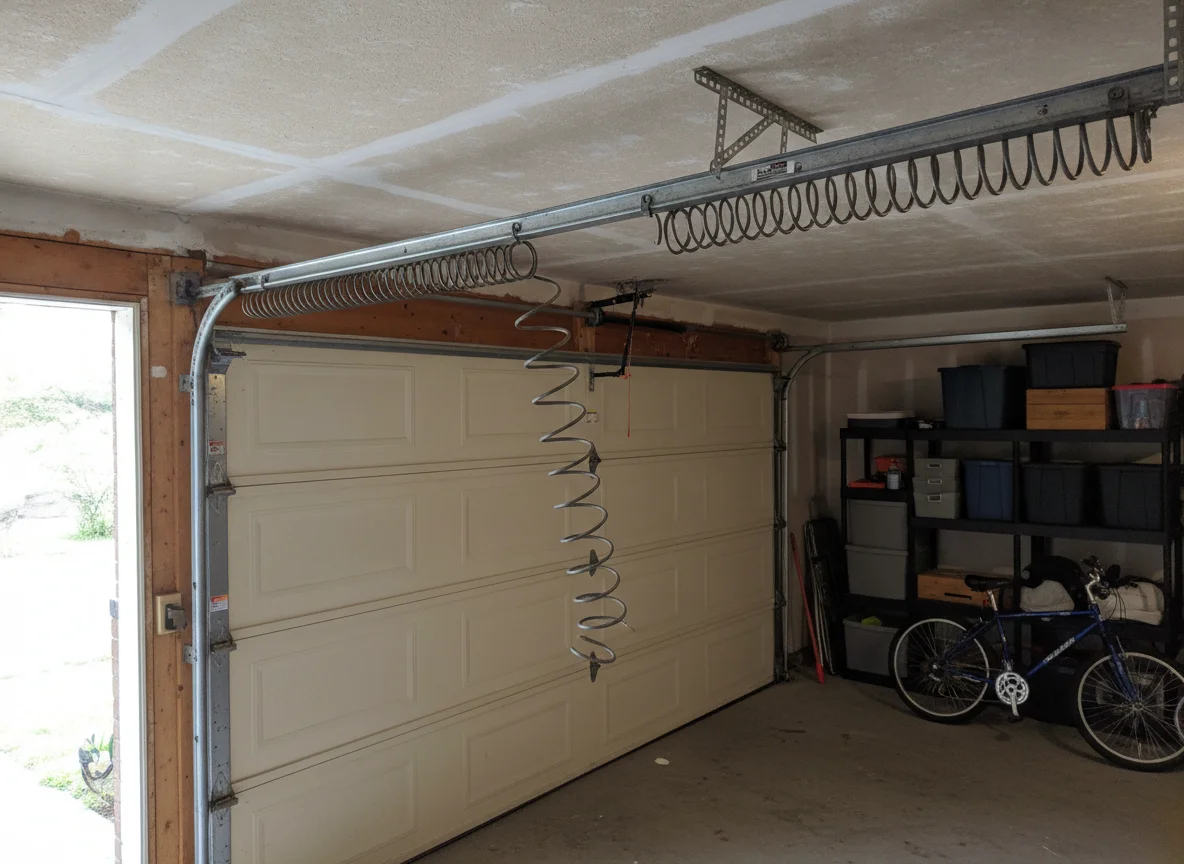
Clues a spring has failed
A crack like a gunshot, frequently when nobody was near the door. A torsion spring carries its heaviest load while the door is shut, which is why so many snap at that moment.
A break in the coil
Look at the shaft over the shut door. Where a torsion spring failed, the coil has a gap of a few inches.
The door feels very heavy all at once, or drops when you let go of it halfway.
The opener groans or lifts the door an inch or two, then gives up
Many openers detect the added weight and reverse, so it seems the opener is at fault.
The door rises unevenly, one side ahead of the other. Where a spring sits beside each track, one of them has gone slack.
The door slams down over the last foot instead of easing to a stop.
Heard a crack and now the door won't rise? Don't touch it, and tell us what shows above the opening.
Contact UsKeep things safe until repair
Wound torsion hardware stores enough force to fracture bones, and once a spring fails the whole door rests on cables and brackets. Until a repair is done, keep to these:
Skip hand-lifting and stop pressing the opener button over and over
The opener was never meant to lift that weight, and repeated tries can grind its gears down.
Leave the emergency release alone while the door is raised
With nothing left to counter its weight, the door can fall hard.
Winding a torsion spring is not a home project
The winding cones hold the danger, and they account for most of the serious injuries in garage door work.
Children and pets stay out of the garage, and the car goes elsewhere if the door hangs partway open.
Say so when you write if a vehicle is still inside.
Torsion versus extension springs
Torsion springs mount on a steel shaft above the shut door. They store energy by twisting and turn the cable drums.
Most newer doors have them. They raise a door more smoothly than extension springs do, and a failure is less dangerous since the spring stays captive on its shaft.
Extension springs stretch along each horizontal track as the door comes down, and older or lighter doors usually have them. A safety cable must pass through each one; without it a broken spring can whip across the garage and hit whatever is nearby.
If you can't find one on yours, get it added even when nothing has broken.
Many older extension-spring doors can be changed over to a torsion setup, an upgrade worth asking about when a technician is already working on the door.
What a spring job involves
Identify and measure the broken spring
Wire gauge, inside diameter, length and winding direction all count. Guessing any of them leaves the door out of balance.
The door's weight gets accounted for
The correct spring is the one sized for your particular door, not whichever one was handy.
The old spring is taken off safely, with its tension let out before any bolt is touched.
The new spring goes on and is wound or set, and the cables get checked on the drums so each side pulls equally.
Balance, then a test run
With the opener disconnected, the door ought to stay about where you release it at waist height, and then cycle smoothly under the opener.
Describe what the door is doing
One or two sentences will do. You needn't know what the broken part is called, just what you noticed.
One spring, or the pair?
On a two-spring door, each spring has lifted the door the same number of times. Once one breaks, its partner tends to follow before long.
Doing the pair at once saves a second trip, and the door stays in balance because a new spring beside an old one pulls unevenly.
Ask whoever you hire what they suggest for your door and why, and check their license with the Arizona Registrar of Contractors before agreeing to anything.
What moves the price of spring work
Spring style, plus the count on torsion doors: a lone spring or two.
Door size and weight
Wide, solid-wood or well-insulated steel doors need heavier springs than a lightweight single door does.
The spring's cycle rating
A spring is built for a set number of open-and-close cycles. Higher ratings cost more but last longer on a door that cycles many times every single day.
Other worn parts
Fraying cables at the drums, dragging rollers or worn shaft bearings are simpler to replace while the door is already taken apart for the spring.
A switch from extension to torsion springs, when you ask for one.
How long do springs last?
Use matters far more than age. Kingman's median home dates from 1995, so some springs have simply run out of cycles, and a busy family door uses them up much faster than a rarely opened one.
January mornings in Kingman average about 31 F, and cold steel turns brittle, so breaks cluster on the first chilly mornings of winter.
When springs fail early, it's reasonable to ask about a higher-cycle set.
The extra cost is usually small next to repeating the whole job.
If the spring isn't the issue
The spring looks intact, but the door sags or a cable hangs loose
Look at garage door cable repair.
Nothing is broken, but the door runs noisy or slow
A maintenance visit catches tired springs before they snap.
Questions people ask
Is swapping a door spring a DIY job?
Extension springs, with safety cables fitted and the door fully raised and clamped, are something some homeowners tackle.
Torsion springs are different. Winding one demands proper bars and the exact spring specs, and a slipped bar dumps all the stored energy through your hands. This is the repair where paying a professional protects you, not just saves time.
Can I raise the door by hand to free my car?
Not safely, not with a failed spring. Leave it shut and mention the vehicle when you contact us.
Why did the spring go when no one touched the door?
Steel tires a bit with every cycle, and a torsion spring is wound hardest while the door is shut. That is typically when the final crack comes, and cold makes the metal more brittle. It doesn't mean anything else is wrong.
Does a replacement spring need a new opener?
Rarely. After months of straining against a dead spring, though, an opener may have stripped gears worth testing.
More garage door help
Garage Door Cable Repair
Frayed, snapped or slipped cables, plus doors that hang crooked.
Read more →Garage Door Opener Repair
Openers that hum, reverse or ignore the remote, and replacements when repair makes no sense.
Read more →Garage Door Maintenance
A tune-up that tests springs, cables, rollers and the safety reverse while all still works.
Read more →Reach out
Tell us if it's a single or double door, what you heard, whether it budges at all, and whether a car is stuck inside.
Stand on the floor and photograph the spring above the closed door; that shows its type and the break, and speeds up our reply.