How to insulated garage doors is best understood as a comfort and draft-control project. Insulation can help steady garage temperatures, soften outside noise, and protect stored items. It cannot repair broken springs, unsafe cables, damaged panels, or gaps that need new seals.
Table of Contents
- What does insulating a garage door actually change?
- How do you choose the right insulation for an existing garage door?
- How do you insulate a garage door safely?
- Should you replace the bottom seal before insulating the door?
- What are the benefits and drawbacks of insulating a garage door?
- How can you tell whether an insulated garage door is working properly?
- When should you hire a garage door professional for insulation work?
- Frequently Asked Questions
What does insulating a garage door actually change?
Insulation adds a layer that slows heat movement through the door. This can help a garage feel cooler in summer and warmer in winter. The result depends on the door material, insulation type, local weather, and seals around the door.
How insulation affects temperature, noise, and door strength
A well-fitted layer can help the garage keep a steadier temperature. It may also soften road noise, rain noise, and sounds from inside the garage. Some kits make thin panels feel stronger, but insulation does not turn a light door into the best garage door for every home.
R-value is a measure of how well a material slows heat flow. A higher R-value can help, but a good fit matters too. Gaps, crushed pieces, and open edges can lower the real benefit. Insulation works best when the side, top, and bottom seals close well.
What insulation cannot fix in an older garage
Insulation will not stop water that enters through a damaged threshold. It will not repair a bent track, loose hinge, or door that sits unevenly. It also cannot make a broken opener safe to use.
Kingman Garage Door Repair can help property owners tell comfort work apart from repair work. That check matters because added material can make an unsafe door harder to operate. Garage door safety should come before better temperature control.
How do you choose the right insulation for an existing garage door?
The right choice depends on the door design, panel depth, weather, and space near the hinges. A sectional door with open panel spaces gives more choices than a thin, single-layer door. The material must fit firmly without touching parts that move.
Comparing foam board, reflective panels, and fiberglass kits
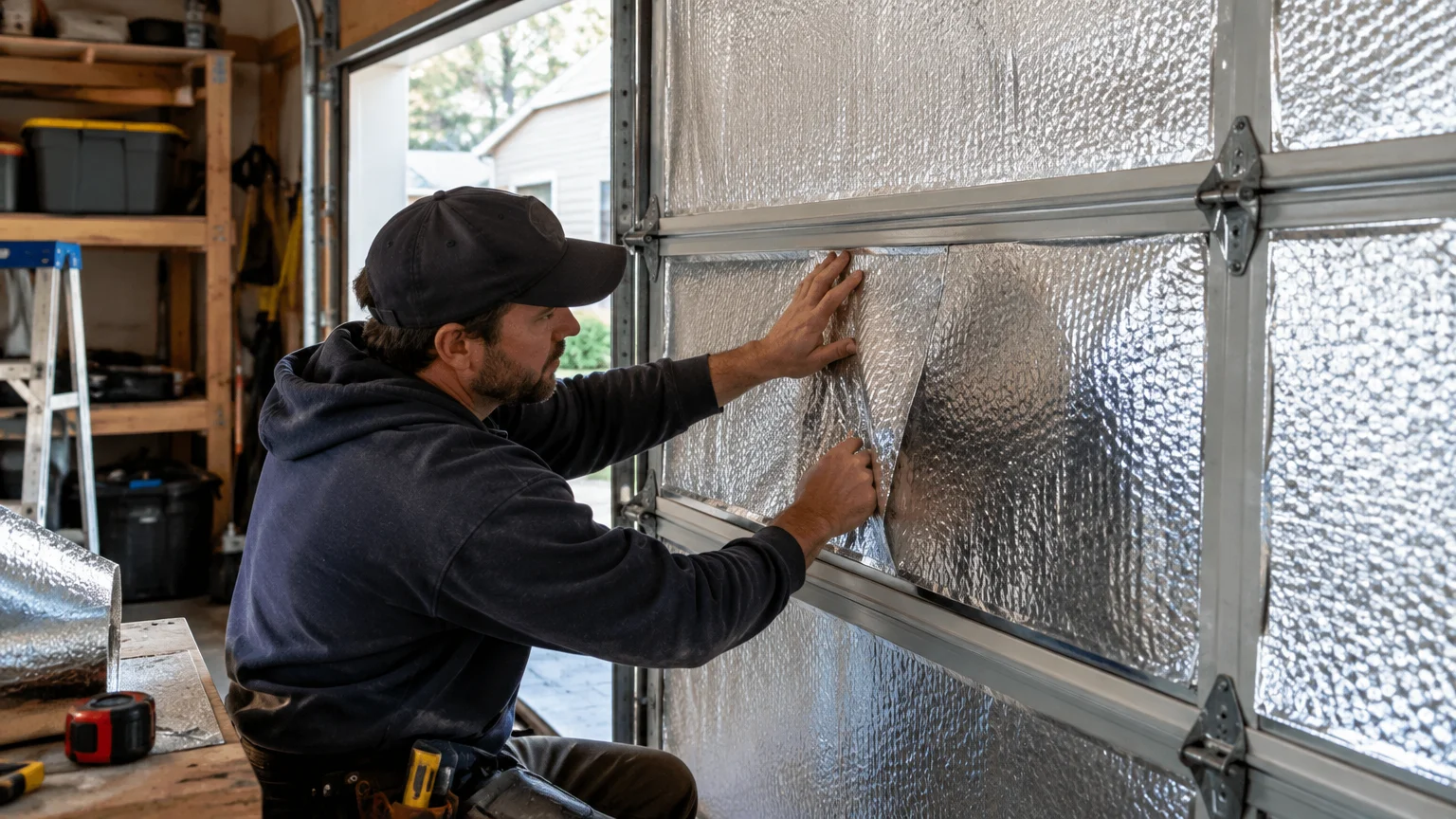
Foam board is light and can fit many sectional doors. It gives a firm layer when it is cut and held in place correctly. Reflective panels are thin and may help where space is tight, but they need an air gap to work well.
Fiberglass kits can fill larger spaces, but they need careful handling. Loose fibers can bother the skin, eyes, and lungs. Any kit should have clear fitting instructions. It should stay away from hinges, rollers, cables, and tracks.
These choices explain why homeowners ask how to insulated garage doors in different ways. There is no single material that fits every door. Door size, panel shape, weather, and safe working space all matter.
How door construction and panel space affect the choice
First, identify whether the door has steel panels, wood panels, windows, or a mix. Measure panel openings only when the door is safely closed and still. The material should not press against hinges or make the panels bow.
Avoid adding heavy layers without checking door balance. Springs support the door’s weight. Extra weight can change how the door moves and can strain the opener. A light kit made for garage doors is often safer than layers made from household materials.
How do you insulate a garage door safely?
A homeowner may inspect, clean, and fit light insulation when the door is stable. The work must avoid springs, cables, brackets, and tracks. Keep the door closed during preparation. Anyone who sees damage, sudden movement, or a heavy door should stop.
Tools and preparation for an installed sectional door
Safe preparation may include a tape measure, pencil, straight edge, utility knife, gloves, and eye protection. Keep the work area clear. Do not force the door, lift it by hand, or disconnect the opener just to make the work easier.
A homeowner can wipe dust from panel surfaces and look for loose fasteners. Read the kit directions before cutting anything. No material should cover warning labels, block drain points, or hold water against the door.
Simple cleaning and visual checks do not always need a professional. These tasks are reasonable when the door works normally and no dangerous hardware must be touched. Stop if the job moves close to a spring, cable, bottom bracket, or track.
How to fit insulation without interfering with hinges or tracks
The safe goal is to place light material inside each panel space. Keep every moving part clear. The insulation should sit flat and stay in place while the door moves. It should not rub a track, press on a hinge, or cover a roller path.
A homeowner should not adjust springs, lift cables, bottom brackets, or counterbalance parts. These parts can hold dangerous force. If fitting requires work near them, stop and call a trained garage door professional.
A garage door spring can move with great force when damaged or adjusted the wrong way. Spring work is not a simple insulation task. It involves special tools and training, so it should be handled by a professional.
Should you replace the bottom seal before insulating the door?
Yes, deal with a damaged bottom seal before judging the value of insulation. The bottom seal closes the space between the door and floor. If it is cracked, flat, or missing, air and water can enter around the new insulation.
How gaps at the floor, sides, and top waste insulation benefits
A door can have good panel insulation and still feel drafty. Air may enter below the door, around the side jambs, or across the top. Perimeter weatherstripping helps close these edges and keeps large air leaks from reducing the gain from insulation.
The floor matters too. A concrete floor may be uneven and leave small gaps under the door. A threshold can help close that gap when fitted on a clean, sound surface. It should not hide a drainage problem or hold water against the door.
When to use a bottom seal, threshold, or perimeter weatherstripping
A bottom seal fits into the retainer along the lower edge of many sectional doors. A threshold sits on the floor below the closed door. Side and top weatherstripping fits around the frame. Each part closes a different gap, so one product may not replace the others.
Kingman Garage Door Repair helps property owners decide whether a problem needs insulation, weatherstripping, or garage door repair. A careful look can prevent the wrong seal from being fitted to a damaged frame. This is useful for homes and businesses in Kingman.
What are the benefits and drawbacks of insulating a garage door?
Insulation can improve comfort, reduce drafts, and help protect items stored in the garage. It can also soften outside noise and make a thin door feel less flimsy. The gain is strongest when the door closes evenly and the seals work well.
When insulation can improve comfort and protect stored belongings
A steadier garage temperature may help protect paint, tools, paper goods, and other items from large temperature changes. It can also make the room more pleasant for short tasks. Insulation may help a room above the garage feel quieter.
These gains are not automatic. A poorly sealed wall, roof, window, or service door may still let outside air enter. Garage door insulation is one part of a wider plan. It is not a replacement for sound building care.
How added weight can affect springs, balance, and opener operation
Extra weight can change the balance of a sectional door. A balanced door should move smoothly and stay in place during a proper check. If it becomes heavy, drops fast, strains the opener, or reverses, it needs attention.
Never correct added weight by adjusting a spring or cable. Torsion and extension springs hold stored energy. A wrong adjustment can cause serious injury or damage. The safer choice is to have the whole door checked before using it again.
This is one reason how to insulated garage doors should not be treated as a simple material project. The door, opener, springs, seals, and tracks work together. Changing one part can affect the others.
How can you tell whether an insulated garage door is working properly?
A homeowner can check for even panel fit, fewer drafts, and smooth movement without touching risky hardware. The door should open and close without scraping, shaking, or stopping for no clear reason. New noise or movement means the work needs review.
Simple checks for drafts, panel fit, balance, and operating noise
With the door closed, look for daylight around the sides and top. Check whether the bottom seal touches the floor across its width. The panels should stay aligned, and insulation should not bulge into hinges or tracks.
Listen during normal opener use. Grinding, loud popping, repeated clicking, or rubbing may point to a repair need. A homeowner can clean dust from photo-eye lenses and check that nothing blocks them. Do not change spring or cable settings.
Signs the door needs adjustment or garage door repair
Stop using the door if it falls, binds, leaves its track, or shows a loose cable. The same applies when a spring breaks, a panel bends, or the opener pulls without moving the door. These are repair problems, not insulation problems.
Garage Door Off Track Repair, Garage Door Opener Repair, and Garage Door Cable Repair address different faults. Choosing the right service starts with the symptom. A professional can inspect the system before insulation adds weight or hides a damaged panel.
When should you hire a garage door professional for insulation work?
Professional help is needed when insulation work involves springs, cables, bottom brackets, damaged panels, or an unbalanced door. It is also wise when the door has an unknown history or added material may change its weight. Safe DIY work should stay limited to light fitting, cleaning, and visual checks.
Situations involving broken springs, damaged panels, or an unbalanced door
A broken spring may leave the door very heavy. A damaged panel may change the door’s path. A loose cable can move without warning. These faults can injure someone who tries to lift, release, tighten, or reset the hardware.
A professional can check the counterbalance system, hinges, rollers, tracks, opener, and seals as one system. This matters because an apparent insulation issue may really be poor balance or worn hardware.
How to plan insulation alongside weatherstripping and maintenance
The best plan starts with a condition check. Repair unsafe parts first. Then address the bottom seal, threshold, side and top weatherstripping, panel fit, and insulation. This order helps you judge each change clearly.
Kingman Garage Door Repair can help homeowners and business owners across Kingman, including Hilltop, Clacks Canyon, New Kingman-Butler, Golden Valley, Valle Vista, and nearby areas. Insulation should wait when the door is unsafe, stuck, off track, or affected by a broken spring or cable.
Frequently Asked Questions
Can a homeowner insulate an existing garage door?
Yes, a homeowner can often fit a light kit to a stable sectional door. The work should avoid springs, cables, bottom brackets, hinges, and tracks. If the door is heavy, damaged, unbalanced, or hard to move, stop and arrange professional help.
Does garage door insulation stop drafts?
Insulation alone does not stop most drafts. Air can still enter below the door or around the frame. A working bottom seal, threshold, and side and top weatherstripping usually matter more for air control. The door must also close evenly against those seals.
How can someone insulate garage door panels without damaging them?
Use light material made for garage doors and keep it inside the panel space. It should not touch hinges, rollers, tracks, or cables. Do not force thick material into a narrow cavity. If panels bend or the door becomes heavy, stop using it and seek help.
Can insulation damage a garage door opener?
It can add weight that changes how the door moves. The opener may strain, stop, reverse, or make new sounds. Do not change spring tension or opener force settings to correct this. A professional should check balance and operation first.
Who repairs garage doors near me when insulation reveals a fault?
A local garage door professional can inspect the full system and identify the needed service. This may include Garage Door Opener Repair, Garage Door Off Track Repair, or Garage Door Cable Repair. Stop using the door when it falls, binds, or shows damaged hardware.
Key Takeaways
- Insulation can improve comfort, reduce noise, and protect stored items.
- Seals around the bottom, sides, and top are just as important.
- Added weight can change door balance and opener performance.
- Homeowners should not adjust springs, cables, or bottom brackets.
- Repair unsafe hardware before adding insulation.
Insulating an existing garage door can be a useful upkeep project when the door is sound and well sealed. It cannot replace garage door repair for broken springs, damaged panels, loose cables, or opener faults. Careful checks help protect the property and everyone who uses it.
If the door is unsafe, stuck, or changing after insulation work, act before using it again. Contact us today to arrange help from Kingman Garage Door Repair.